
What is Copenhagen Legal Aid and who can get help?
The ambition of Copenhagen Legal Aid is to provide legal advice on the same level as if you contacted a lawyer. To help you, we have 180 volunteers who are employed by law firms, courts, private firms and the public sector.

What should I bring when I contact the Legal Aid?
Remember also MitID, as many authorities and the courts can only be contacted through the use of MitID.
If your case is going to court, you must also bring your home insurance or family insurance if you have one. This information is important, if it is necessary to seek support to take your case to court. Here, too, you should always remember MitID.
Case files
Annual income statements & insurances
MitID
How does Copenhagen Legal Aid help you?
How do we work?
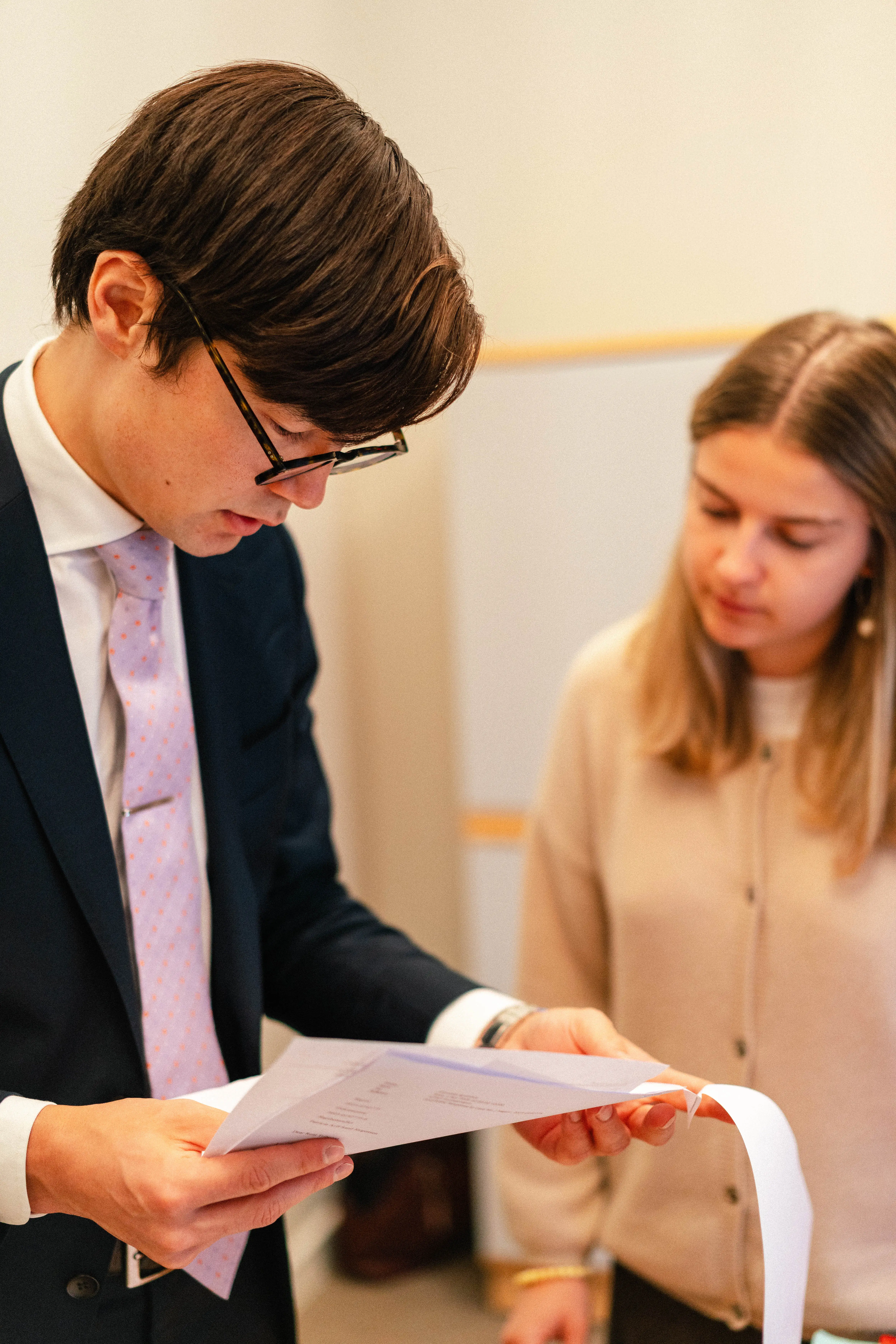
When you contact Copenhagen Legal Aid, you will be assigned two permanent advisers with whom you can discuss your case. The advisers will review the case with you and look at any documents that you have brought with you. Depending on what the case is about, they can either give you verbal advice or offer to deal with the matter for you.
If we can help you, we will offer to represent you in the case from start to finish. This means that we write to counterparties and other parties in the case, and help you contact the relevant authorities.
We will follow the case until it is concluded. It will be the same advisers who will deal with your case throughout the process.
On confidentiality and independence
Our advisers have a duty of confidentiality, so your case details will only be shared between you and your counsellors. The Legal Aid is also a self-governing and independent institution, which means that we are not dependent on political or other interests, nor are we affiliated with public authorities.
On referral to the courts
Most cases can be resolved without having to go to the courts. If the case nevertheless goes to court, we will help to apply for a free process with the appointment of a lawyer who can help you. The Legal Aid is unable to appear in court for you. In some cases simpler cases - if you are comfortable with doing so - you can handle a case yourself in court, if the case is considered eligible for the rules of the simplified court procedure. If this is the case, the Legal Aid will assist you in preparing the case.
In the following areas, our assistance is limited to basic verbal advice
- If you earn above the income limits for standard legal aid
- If you are an active business owner and your question is primarily of a commercial nature
- If you are a suspect or defendant in a public criminal case
- If you are seeking an assessment of your legal position in connection with a defamation case
- Buying and selling real estate, as well as drafting mortgage deeds, etc.
Please note the following
Waiting time
Come on your allocated weekday
Busy hours
Accessibility
Income limits
Everyone is welcome to seek advice from us, regardless of nationality, even if you do not live in Copenhagen or in Denmark. The only prerequisite for getting help is that your and your household's total annual income is below the income limits below. However, if you serve above this limit, we will provide an overall verbal advice to help you assess whether you should proceed with your case.
The income limit is an amount set by the government, which is adjusted every year. The limit depends on whether you are in a relationship and/or have children that you support. We use this amount limit because we cannot apply for free court process to run your case if your income exceeds this limit.
Here you can see the amount limit that applies to you. The rates apply to 2026.
Are you single?
Then the amount limit is DKK 385,000 per year. The amount is calculated based on your pre-tax income.
Does your case relate to a dispute in a relationship in which you are one party?
Then the same income limit applies as for singles.
Are you in a relationship or are you married?
Then the total amount for you and your partner is DKK 490,000 per year before taxes.
Are you supporting one or more children under the age of 18?
Then you can add DKK 67,000 to the income limit for single people or for people in relationships for each child. This applies to all children, including stepchildren and foster children, under the age of 18 who either live with you or are predominantly dependent on you.
Frequently Asked Questions about Legal Aid
Here you will find answers to frequently asked questions about how Copenhagen Legal Aid can assist you.
No, everyone can get advice from Copenhagen Legal Aid. However, applicants must have an income below a certain limit. However, if you earn more than the income limits, we offer an overall verbal advice which can help you assess whether you should proceed with your case.
The waiting time depends on how many clients show up each evening and how complex the cases are. But it is a good idea to prepare for some waiting time. We make sure that all clients have time to speak with a adviser the same night they visit the Legal Aid. If you already have an ongoing case, you can make an appointment for a meeting after 20.00, so that we can help the new clients first, who have often been waiting since before 18.30.
The Legal Aid is open every weekday evening for new clients. You can see opening hours here.
However, if you are a returning client, once you have sought advice in Legal Aid on a given day of the week, you are associated with that particular weekday and the advisers who have your case. This means that you will then not be able to get advice from the Legal Aid on another day of the week - even in different cases.
If you turn up on the wrong day, you will likely be asked to come back on the correct weekday. We do this to ensure that you are advised by the same advisers who know you and your cases - but also because we have many clients and need to make sure that we can advise all our clients effectively.
Keep in mind that our advisors provide their assistance free of charge and unpaid in their spare time. If, nevertheless, you have a special need to change the day of the week, this can be done by agreement with the responsible manager.
The Legal aid may provide advice on an anonymous basis, but if so, advice will only be provided verbally. However, Legal Aid employees have a duty of confidentiality and are not allowed to share your personal information with others, including with the authorities.
No, Legal Aid employees have a duty of confidentiality. Legal Aid is a private, independent, self-owned organisation which is not linked to public authorities or others. See about treatment of personal data here.
No, the Legal Aid can usually handle your case and write letters for you to the other parties in the case, if we deem it necessary. If we consider that you can contact the other party yourself, we will guide you to proceed with the matter yourself.
No, our help is free. However, some complaint bodies charge a fee, which you must pay yourself - e.g. the Rent Board or other complaint boards.
Legal Aid advisers do their best to advise and assist you in the best resolution of your case. You decide for yourself whether to follow the guidance of the advisers. However, the Legal Aid may choose to withdraw from the case if the Legal Aid considers that there is no legal basis for conducting the case as you wish.
If you are unable to attend the Legal Aid yourself, you can get a family member or friend to come to us instead. They must have a written power of attorney from you so that they can act on your behalf and access your personal information. The Legal Aid can help you make the power of attorney.
No, Legal Aid employees work only in the evening and cannot go to court in your case. If the case is going to court or you have been subpoenaed, the Legal Aid will help you to seek a free trial with the appointment of a lawyer. In cases that fall under the rules for a simplified court process, the Legal Aid can prepare you to appear in court yourself.
Most clients can get hel from the Legal Aid, but is is ultimately the Legal Aid advisers who assess whether assistance should be offered for a specific case.
No, you generally cannot make an appointment for a meeting in new cases. All cases start with a personal conversation - either through a physical meeting or by contacting us by phone.
If you have an existing case, you can arrange a meeting with your advisor, but you should still expect waiting time, as we cannot plan how long time each meeting takes.
Yes, but we serve the clients in attendance first, and then call the clients who have contacted us by phone. It may therefore be late in the evening before we can call you back. We generally only provide general verbal advice on telephone inquiries, as it is difficult to start and properly assess an actual case when we have not met you physically and have not had the opportunity to look at the case documents.
Unfortunately, the Legal Aid cannot offer advice via email. This is because the Legal Aid cannot provide proper professional legal advice without having access to the case documents and being able to discuss your case with you.
Yes, the Legal Aid can help you with several different cases at the same time. All your cases must be handled by the same advisers and you must therefore always show up on the same day of the week.
Yes, the Legal Aid can help you in English, but if you speak other languages, you should bring an interpreter. The advisers do their best to help all clients, even where there are language difficulties.
Legal Aid advisers work free of charge in their spare time. The costs of running Copenhagen Legal Aid are covered by grants from the Ministry of Justice, the City of Copenhagen and a number of grants from which the Legal Aid is applying for support.
Our 150-200 advisors are trained lawyers, lawyers and law students. They advise on all the areas of law that the Legal Aid deals with, and therefore they may not be specialised in the area of law that you case is about. However, together the Legal Aid's advisers have a very wide range of experience to draw on.
You should bring all relevant letters, documents and case files in your case when you contact the Legal Aid. Remember also MitID, as many authorities and the courts can only be contacted using MitID.
No, we do not recommend specific lawyers. You can find a list of all Danish lawyers and their areas of expertise at www.advokatnoeglen.dk.
We are here to help you.